Stratocaster Pickups : The Story of the Sonic Revolution That Defined the Sound of the Modern Electric Guitar
The History of Stratocaster Pickups : From 1954 to Legend
The history of Stratocaster pickups is inextricably linked to that of the most copied electric guitar in the world. In 1954, riding the wave of the Telecaster's success, Leo Fender introduced the Stratocaster: a guitar with a futuristic design, a streamlined body, a synchronized vibrato, and, most importantly, three selectable single-coil pickups . Designed with the help of Freddie Tavares and guitarists like Bill Carson, the Stratocaster immediately established itself as a cutting-edge instrument.
The Stratocaster pickups design retained the Telecaster principle but refined it: six individual cylindrical Alnico magnets, a coil of copper wire wound directly around the magnets, and a molded plastic cover. These pickups were mounted on a removable pickguard that housed all the electronics, a modular design allowing for easy replacement or modification of each component.
The three pickups , identical from the start, offered a unique tonal palette thanks to the three-position selector switch. Guitarists quickly discovered that by wedging the switch between two positions, they could obtain hollow, nasal "intermediate" tones. Fender officially adopted these sounds in 1977 with the five-position selector switch, establishing the now-famous positions 2 and 4.
The early models from the 1950s, with their staggered Alnico III or V magnets and Formvar enameled wire, are now the most sought-after by collectors. Their hand-wound pickups , with varying tolerances, produce a crystalline, airy, and dynamic sound considered the holy grail of vintage Stratocaster tone.
Technical Operation of Stratocaster Pickups
Single-Coil Architecture
Stratocaster pickups are single-coils, composed of:
- Six individual cylindrical magnets (one per rope), usually made of Alnico (aluminum-nickel-cobalt alloy), often of staggered heights
- A coil of copper wire wound around the magnets (usually 42 AWG)
- Two vulcanized fiber flanges (top and bottom) that hold the magnets
- A plastic cover (white, parchment, black…) that protects the reel
The Stratocaster Sound: Unique Characteristics
Bridge Pickup :
- Its sound is brilliant, sharp and incisive with a precise attack
- Piercing highs and scooped mids, perfect for rock and blues-rock
- Often the thinnest of the three, hence the frequent choice to pair it with a tone control or replace it with a humbucker
- Exceptional dynamic response to the pick
- The "glassy" sound that cuts through any mix
Neck Pickup :
- A warm, round and fluid sound with full bass and silky treble
- Perfect for blues, ballads and singing solos
- The characteristic "bell-like" sound, crystalline and airy
- Generous sustain and natural compression under the pick
Pickup Middle and Intermediate Positions (2 and 4):
- Middle Pickup only: balanced, slightly nasal sound, ideal for rhythm playing
- Positions 2 and 4: the famous "quack" sound, hollow and percussive, resulting from the partial phase cancellation between two pickups
- The middle Pickup is often reverse-wound (RWRP) to cancel hum in intermediate positions
- Exceptional clarity for funk, pop, and arpeggios
The Peculiarity of Snoring (Hum)
Unlike humbuckers, Stratocaster single-coils pick up electromagnetic interference, producing a slight hum in positions 1, 3, and 5. This "flaw" is an integral part of the vintage character and authenticity of the Stratocaster sound, although modern noise-canceling versions exist.
The Different Types of Stratocaster Pickups
Vintage Stratocaster Pickups (1950s-1970s)
'54 Stratocaster (1954-1956) – pickups , hand-wound with approximately 8,000 turns of Formvar wire. Clear, sweet, and dynamic tone with moderate output. The Alnico III magnets of the very first models offer unparalleled warmth and delicacy. The holy grail for collectors.
Stratocaster '57 – A modern reproduction of pickups late 1950s
Stratocaster '62-'65 – Slightly warmer than the '57, with plain enamel wire and a slightly larger winding. Alnico V magnets for more body and midrange. The rosewood fretboard sound, from Hendrix to Gilmour.
'70s Stratocaster – Brighter, more incisive tone, with flat-pole, non-staggered Alnico V magnets and tighter winding. Ideal for 70s funk, disco, and rock.
Modern Stratocaster Pickups (1980s to Present)
Stratocaster Hot Vintage – Larger windings for more gain and midrange, while retaining the classic Stratocaster character. Perfect for blues-rock and rock.
Stratocaster Noiseless – Noise cancellation technology (stacked coil or dummy coil) to eliminate hum while preserving the single-coil sound. Ideal for stage and environments with high levels of electromagnetic interference.
Stratocaster Texas Special – Overwound for increased output, mids, and bass. The classic Stevie Ray Vaughan Texas sound, perfect for blues and Southern rock.
Stratocaster Lace Sensor – Pickups with magnetic barrier technology, very quiet, popularized by Fender in the 80s-90s and adopted by Eric Clapton and Jeff Beck at the time.
Stratocaster Custom Shop – Pickups , hand-wound with authentic vintage components (Alnico magnets, Formvar or enamel wire, fiber shields). Exact reproduction of the sounds of the 50s and 60s.
High Output Stratocaster Pickups
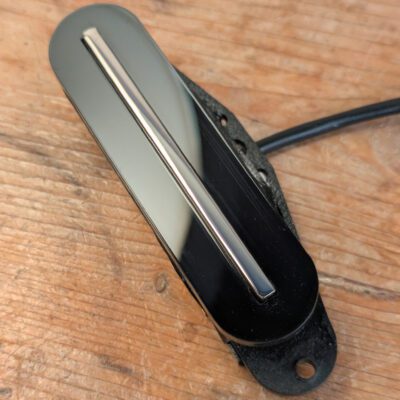
Stratocaster Hot Rail – Single-coil humbucker with blades (rails) instead of pole pieces, delivering the power of a humbucker in a Strat. Perfect for hard rock and metal.
Stratocaster Quarter Pound – Oversized magnets for massive output and a thick sound. Ideal for heavy rock and punk.
Stratocaster Rail (single) – Pickups , offering a consistent response across all strings and increased tolerance for bends without loss of volume.
Stratocaster Pickups for Special Configurations
Stratocaster HSS (Fat Strat) – Humbucker at the bridge, two single-coils at the neck and middle. The most versatile configuration, from blues to metal, popularized in the 80s.
Stratocaster HSH – Two humbuckers and a central single-coil, configuration of the “superstrats” (Ibanez, Jackson, Charvel) for shred and modern rock.
Stratocaster Baritone – Pickups specially designed for low tunings, with an optimized response for low frequencies.
7-String Stratocaster – Pickups to capture the extra low E string. Used in modern metal and djent on extended superstrats.
Legendary Guitarists and Their Stratocaster Pickups
The Pioneers (1950-1970)
Buddy Holly – One of the first to popularize the Stratocaster in the early days of rock and roll. His appearance on the Ed Sullivan Show with a sunburst Strat inspired a whole generation of British guitarists.
Hank Marvin (The Shadows) – Owner of the first Stratocaster imported into England, Marvin defined the clean, reverberating, singing instrumental sound that influenced all of European rock.
Buddy Guy – A pioneer of Chicago electric blues, Guy made the Stratocaster an instrument of raw and wild expression, directly influencing Hendrix, Clapton and Vaughan.
Dick Dale – “King of the Surf Guitar”, his ultra-fast playing and massive use of reverb created the surf sound with his Stratocaster.
Jimi Hendrix – The guitarist who forever redefined the Stratocaster. His Strat played backwards, combined with fuzz, wah and Marshall amps, pushed all the limits of the instrument and created an entire sonic vocabulary.
The Era of Classic Rock (1960-1980)
Eric Clapton – With “Blackie” and “Brownie”, Clapton defined the blues-rock Stratocaster sound of the 70s before adopting the Lace Sensor and mid-boost of his signature model.
David Gilmour (Pink Floyd) – His "Black Strat" is one of the most famous guitars in history. His lyrical solos, his handling of sustain and effects defined the sound of progressive rock.
Ritchie Blackmore (Deep Purple, Rainbow) – Scalloped Stratocaster and pickup often lowered to the maximum, Blackmore proved that the Strat could dominate hard rock.
Rory Gallagher – His worn-out '61 Stratocaster is an icon of Irish blues-rock. His passionate playing and raw sound have inspired generations.
Mark Knopfler (Dire Straits) – Fingerstyle and position 4: the sound of "Sultans of Swing" is the ultimate demonstration of the "quack" Stratocaster.
The Modern Era (1980-Present)
Stevie Ray Vaughan – His "Number One" and heavy gauge strings defined the modern Texas sound. pickups are directly inspired by his powerful and warm approach.
Yngwie Malmsteen – Scalloped Stratocaster and pickups for neo-classical shredding, demonstrating that the Strat can be a high-gain precision machine.
Jeff Beck – An absolute master of vibrato and volume control, Beck used the Stratocaster to create unparalleled vocal and expressive sounds.
Nile Rodgers (Chic) – His “Hitmaker”, a '60 Strat with a '59 neck, produced some of the most famous funk rhythms in history, from “Le Freak” to “Get Lucky”.
John Frusciante (Red Hot Chili Peppers) – Stratocaster '62 for a minimalist and expressive funk-rock style, exploiting the full dynamic range of vintage single-coils.
John Mayer – A modern heir to SRV and Hendrix, Mayer played vintage and signature Strats for a long time before co-designing a Stratocaster-inspired model.
Eric Johnson – A perfectionist of sound, Johnson popularized the crystalline, violin-like Strat sound with his pickups signature 1950s-inspired
Cory Wong (Vulfpeck) – Modern master of rhythmic funk, Wong exploits position 4 and percussive playing for an ultra-clean and dynamic Stratocaster sound.
Robert Cray – His refined blues soul is based on a Stratocaster with a clear and direct sound, exploiting the roundness of the pickup and the precision of the intermediate positions.
Choosing the Right Stratocaster Pickups : A Practical Guide
For Blues and Blues-Rock
Opt for vintage '62-'65 or Texas Special pickups with Alnico V magnets for a warm, singing, and dynamic tone. The neck pickup is ideal for expressive solos, while positions 2 and 4 offer finesse.
For Classic and Psychedelic Rock
The '60s pickups deliver the classic Hendrix and Gilmour sound: clarity, grit, and exceptional response to fuzz and overdrive. A slightly more curved bridge compensates for the thinness of this position.
For Funk, Pop and Disco
Low-output '70s or vintage pickups with flat magnets provide the necessary brightness and attack. Positions 2 and 4 are essential for the characteristic "quack" sound.
For Hard Rock and Metal
Opt for high-output pickups (Hot Rails, Quarter Pound) or an HSS/HSH configuration with a humbucker at the bridge for more gain, sustain and thickness, while eliminating hum.
For Jazz and Fusion
Vintage neck pickup or P90-style rail pickups provide the necessary warmth and roundness. Noiseless pickups are appreciated for their quietness in the studio.
For Surf and Instrumental Music
'50s pickups with Alnico III or V magnets and low output deliver the crystalline, reverberant sound of Hank Marvin or Dick Dale. Clarity takes precedence over power.
Technical Considerations
Resistance (Output):
- Vintage low output: 5.5-6.5 kΩ (clear, dynamic sound)
- Vintage standard: 6.5-8 kΩ (classic balance)
- High output: 10-16 kΩ (more gain and sustain)
Type of Magnets:
- Alnico II: Soft, warm, vintage
- Alnico III: Delicate, clear, low attraction (early Strat '54)
- Alnico IV: Balanced, organic, slightly less bright
- Alnico V: The classic Strat, bright and punchy (1957-1970s)
- Ceramic: Very powerful, modern, for hot rails
Winding and Magnets:
- Underwound: Fewer turns, clear and bright sound
- Standard: Classic balance
- Overwound: More turns, a warmer and thicker sound
- Staggered vs. flat: staggered magnets for vintage balance, flat magnets for modern radius necks
Cecca Guitars Handcrafted Stratocaster Upgrades and Pickups
Why Upgrade Your Stratocaster Pickups ?
Replacing your Stratocaster's stock pickups with high-quality, handcrafted pickups is the most effective upgrade for transforming your sound. While functional, stock pickups often use standardized components and industrial manufacturing processes that can't compete with the hand-winding and meticulous component selection of boutiquepickups . Thanks to the Strat's modular design, the process is also remarkably simple.
The Cecca Guitars Range for Stratocaster
At Cecca Guitars, we offer a range of hand-wound Stratocaster pickups made in Normandy, designed to capture the essence of vintage tone while exploring modern sonic territories. Each pickup is handcrafted to order, with meticulous attention to detail.
Goldfinger's – The Authentic Vintage Sound of 1965
The Goldfingeris our tribute to the 1965 Stratocaster pickups , from the heart of the sixties