Metal, in all its diversity and power, isn't just about talent and technique; it's also about sound. And at the heart of that sound lies a crucial element: the guitar pickup. For metal enthusiasts, choosing the right pickup is essential to capturing the essence of their favorite style. In this article, we'll explore the different types of pickups suited to various metal genres, from classic thrash to modern djent, including black, death, and doom metal.
Metal, with its razor-sharp riffs and epic solos, demands pickups capable of capturing every nuance. A guitar pickup for metal isn't just a transducer; it's a sonic craftsman, shaping each note to give it the desired color. Whether you're a fan of the crisp, clean tones of power metal or you're looking for the raw heaviness of doom, understanding the characteristics of different pickups will unlock the doors to limitless musical expression.
Each subgenre of metal has its own sonic identity, and therefore, its own pickups requirements. A pickup that excels in death metal with its deep bass and massive distortion might not be suitable for black metal, where a rawer, more atmospheric sound is preferred. We will detail the specific needs of each genre and the pickups that best meet those needs.
f. Traditional Heavy Metal: The Foundations of Metallic Sound
Classic metal, as shaped by bands like Black Sabbath, laid the foundation for the metal sound. The pickups used during that era, often simple and direct, created a sound that still resonates with fans today. Models like Gibson's PAF (Patent Applied For) played a crucial role in defining this classic tone. Moving closer to the 1980s, Eddie Van Halen installed PAFs on his early Frankenstrat guitars. An ideal pickup to get close to this sound is the HeartBreaker, a vintage Hot Alnico 5 PAF that delivers a warm and powerful tone for a PAF.
There's also the "1984," a variation on Eddie's experiments, where he enjoyed modifying guitars and pickups . The "1984" is essentially a Super Distortion type pickup, but with an Alnico 2 magnet replacing the ceramic one. The definition is less pronounced, but the tone is richer and the sound a bit rounder, achieving that famous "Brown sound.".
For guitarists seeking the perfect balance between vintage authenticity and modern versatility, the Sunset Paradise is an excellent option. Developed as a signature model for NeoGeoFanatic, this humbucker offers a more organic character than modern high-gain pickups . Equipped with Alnico 4 magnets, the neck version of the Sunset Paradise (7.6kOhms) is directly inspired by 1960s Gibson PAFs, delivering an airy yet smooth tone ideal for gritty blues, jazz, and melodic solos. The bridge version (13.6kOhms) is a slightly lower-wound version of the Future Rage, offering a less clinical and warmer tone that excels in everything from 1980s metal to contemporary shredding.
Traditional heavy metal, which emerged in the 1970s and experienced its golden age in the 1980s, differs from hard rock in several key ways:
To capture the essence of traditional heavy metal, pickups must offer a balance between vintage warmth and power, with enough midrange to bring out the genre's characteristic riffs and a dynamic response that allows power chords to be clearly articulated, even with significant distortion.
A subgenre that's already old school! Thrash metal emerged in the early 80s thanks to pioneering bands like Slayer, Anthrax, Exodus, and of course Metallica. These bands, along with Megadeth, make up what fans and the specialized press have dubbed the "Big Four of Thrash.".
Thrash metal is characterized by its blistering speed, technical precision, and aggression. pickups must be able to handle high distortion while maintaining note clarity, even at extreme tempos. A pickup like the Poltergeist is ideal for this genre thanks to its power, fast response, and sharp tone.
Thrash metal reached its peak between 1986 and 1990 with iconic albums such as "Master of Puppets" (Metallica), "Reign in Blood" (Slayer), "Peace Sells... But Who's Buying?" (Megadeth), and "Among the Living" (Anthrax). After a decline in the 1990s, the genre experienced a revival in the 2000s with the emergence of new bands like Havok, Warbringer, and Municipal Waste.
To achieve the authentic thrash sound, pickups must capture both the precision of fast attacks and the power of rhythmic riffs, while allowing technical solos to stand out clearly in the mix.
Death metal demands pickups capable of reproducing deep bass and heavy distortion. Here, clarity isn't sacrificed for power. pickups like the Eraserhead are designed to provide the combination of depth and definition necessary for this extreme style of metal.
Emerging in the mid-1980s, death metal developed as a more complex, violent, and heavier evolution of thrash metal. Pioneering bands like Death (formed by Chuck Schuldiner, often considered "the founding father of death metal"), Possessed (whose 1984 demo Death Metal gave its name to the genre), Morbid Angel, Obituary, and Master laid the foundations for this radical style.
Death metal has diversified into several subgenres such as technical death metal (Necrophagist, Gojira), brutal death metal (Cannibal Corpse, Suffocation), death-doom (My Dying Bride) and melodic death metal (At The Gates, In Flames).
To capture the sonic essence of death metal, pickups must offer exceptional low-frequency response while retaining enough definition so that complex riffs and technical passages remain intelligible despite extreme distortion and high tempos.
Doom metal relies on heavy, slow riffs, demanding pickups capable of producing a deep, saturated sound. The Blade Runner DoomFred signature pickups deliver that warmth and depth characteristic of doom, allowing guitarists to fully explore the cavernous tones that define the genre.
Heavily influenced by the early works of Black Sabbath, particularly the albums Black Sabbath, Paranoid and Master of Reality, doom metal developed as a reaction to the increasing speed of thrash metal in the 1980s. Tracks like "Black Sabbath", "Electric Funeral" and "Into the Void" are considered the foundations of the genre.
To capture the essence of doom metal, pickups must offer exceptional low-frequency response while maintaining sufficient definition so that bass notes remain distinct despite massive distortion and slow tempos.
Progressive metal, with its complexity and frequent tonal shifts, demands versatile pickups . The Future Rage is an excellent example of a pickup capable of adapting to a wide variety of styles and techniques while delivering a precise and modern sound. Another alternative is the Phobos, even more modern and precise with its ceramic magnet, ideal for the technical passages and dynamic changes characteristic of the genre.
Born from the fusion of heavy metal and progressive rock in the 1980s, progressive metal is distinguished by its experimental, complex, and "pseudo-classical" compositions. This musical genre constantly pushes the boundaries of traditional metal music by incorporating elements of jazz fusion, classical music, and psychedelic rock.
Progressive metal has diversified considerably since the 2000s, with bands like Porcupine Tree, Mastodon, Between the Buried and Me and Gojira incorporating elements of post-metal, sludge, death metal and ambient into their progressive sound.
To capture the essence of progressive metal, pickups must offer a balanced response across the entire sonic spectrum, with enough clarity to articulate complex technical passages while retaining the power needed for heavier riffs. Versatility is essential to adapt to the numerous dynamic and tonal shifts that characterize this constantly evolving genre.
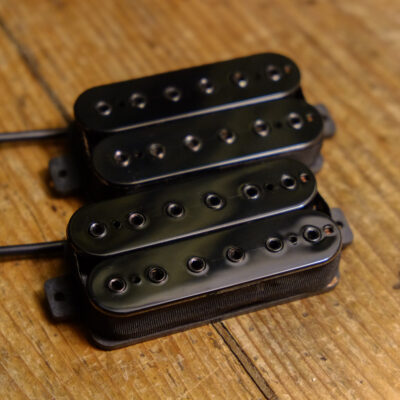
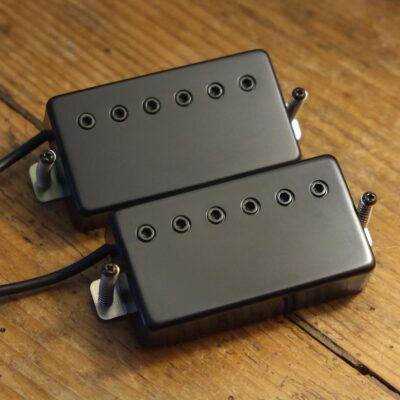
Djent, a relatively recent subgenre, is characterized by staccato rhythms and modern tones, frequently played on 7- or 8-string guitars and in multiscale configurations. Here, the Phobos, available in 6, 7, or 8-string versions, offers the rhythmic precision and clarity necessary for this distinctive style, allowing you to capture the very essence of its sharp and ultra-defined sound.
Emerging in the 2000s, djent takes its name from the onomatopoeia imitating the characteristic sound produced by a heavily distorted guitar playing palm mutes in a very low tuning. This term, initially attributed to guitarist Fredrik Thordendal of Meshuggah, was popularized by Misha Mansoor (Periphery/Bulb) via internet forums, transforming what was merely a playing technique into a genuine musical movement.
To capture the essence of djent, the Phobos pickup stands out for its ability to faithfully reproduce the percussive attacks of palm muting while maintaining exceptional definition in the bass. Its ceramic magnet design offers the surgical precision needed to clearly articulate complex riffs and polyrhythms, even with extremely low tunings and significant distortion.
For guitarists seeking a more organic alternative while retaining the precision required for djent, the Sunset Paradise is an interesting option. With its Alnico 4 magnet, it offers a slightly less clinical sound than the Phobos while maintaining the definition needed for the complex rhythms characteristic of the genre.
Guitarists like Tony Iommi, James Hetfield, and Dimebag Darrell preferences pickupsthat have helped shape their legendary sound. Their pickups offer a fascinating insight into how a single component can influence an entire genre.
Choosing the right pickup depends on many factors, including the type of metal you play, your technique, and the type of guitar you use. We'll offer advice to help you navigate the available options and find the pickup that perfectly matches your style.
Many pickups have become standards in the world of metal. The EMG 81, the Seymour Duncan JB, and the DiMarzio Super Distortion are a few examples of pickups that have marked metal history with their distinctive sound.
Choosing the right guitar pickup for metal is an essential step in finding your unique sound. Whether you're a beginner or an experienced musician, understanding the impact of this component on your tone will allow you to fully express your talent and passion for metal.